ML/NLP / 2026-03-20
IAB 3.0 Content Classifier Training Report
This report summarizes a cascading hierarchical classifier for assigning media content to IAB 3.0 taxonomy categories. The model is designed to replace an external classification API with an in-house system trained on existing labeled data.
Tier 1
Replace an external content classification dependency while preserving hierarchical IAB 3.0 parent-child consistency.
Trained a cascading taxonomy classifier where Tier 1 narrows Tier 2 candidates and Tier 2 narrows Tier 3 candidates.
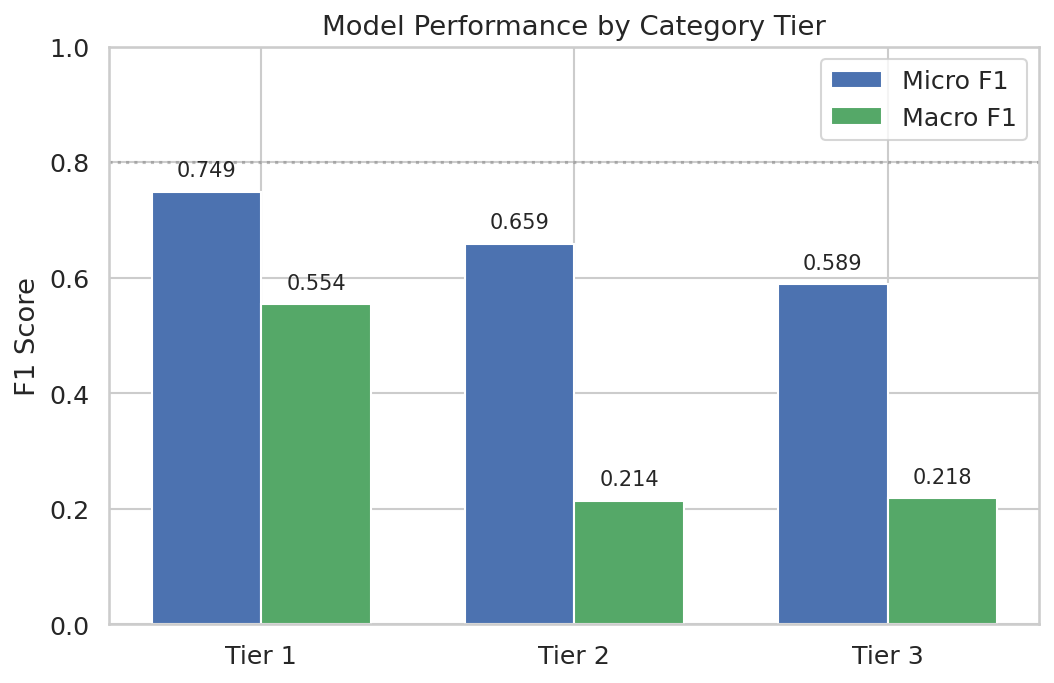
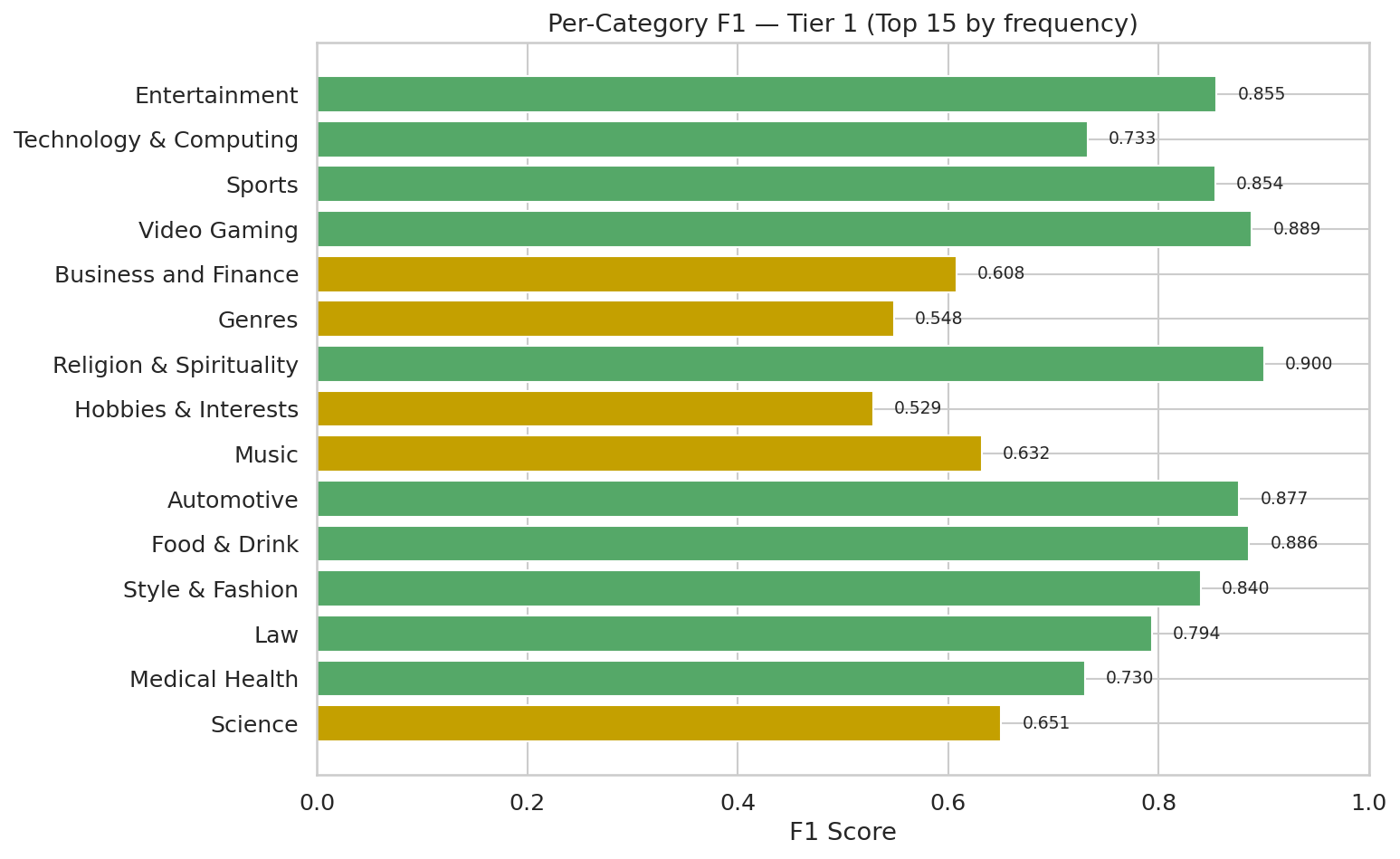
Tier 1 reached 74.9% micro F1, with clear next steps around rare-category balancing and deeper-tier thresholds.
- Python
- NLP
- IAB 3.0
- Hierarchical Classification
- Model Evaluation
- Taxonomy Modeling
Overview
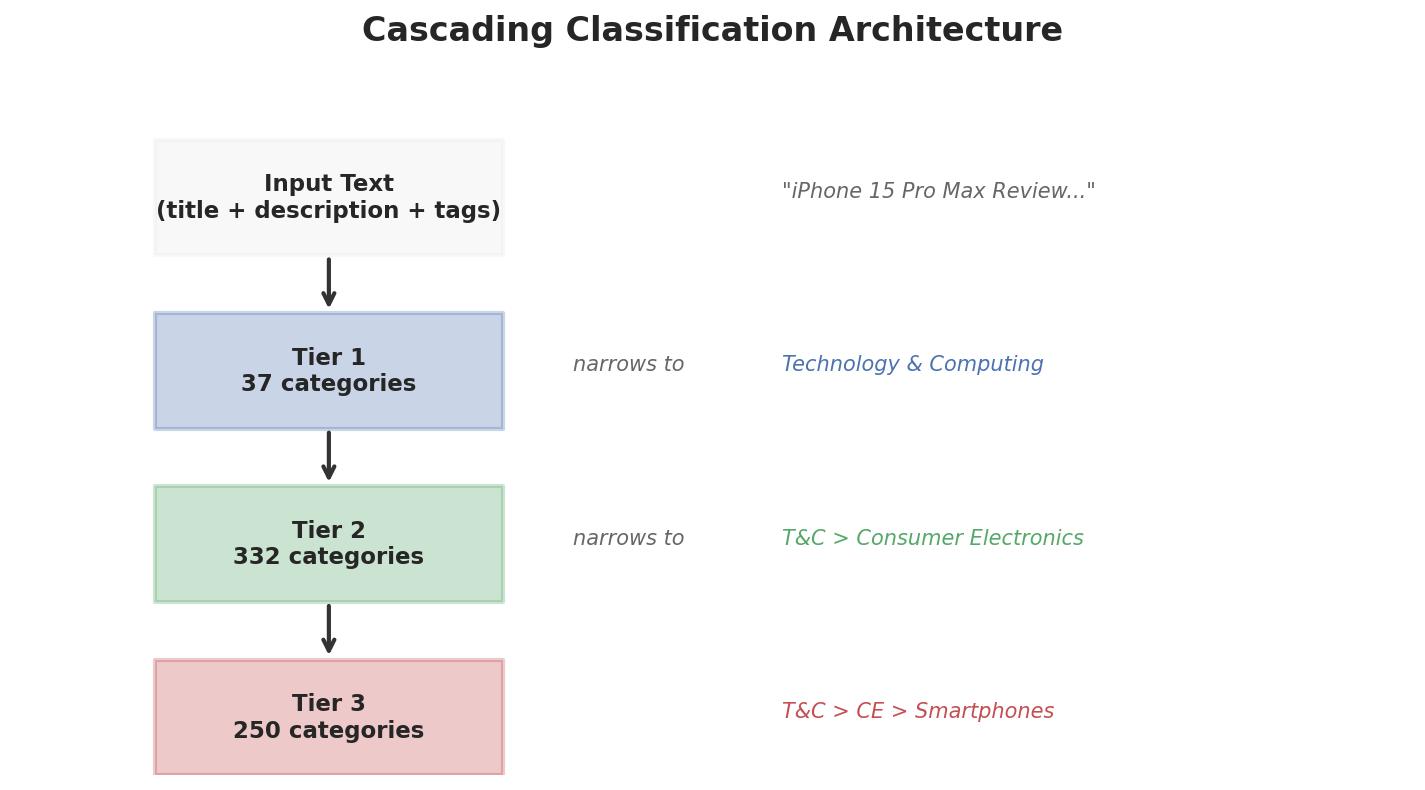
The model classifies media records into IAB 3.0 taxonomy categories using a cascading hierarchy. Tier 1 predictions narrow the allowed Tier 2 predictions, and Tier 2 predictions narrow the allowed Tier 3 predictions.
This structure keeps parent-child consistency intact and reduces impossible category combinations.
Performance
| Level | Micro F1 | Macro F1 |
|---|---|---|
| Tier 1 | 74.9% | 55.4% |
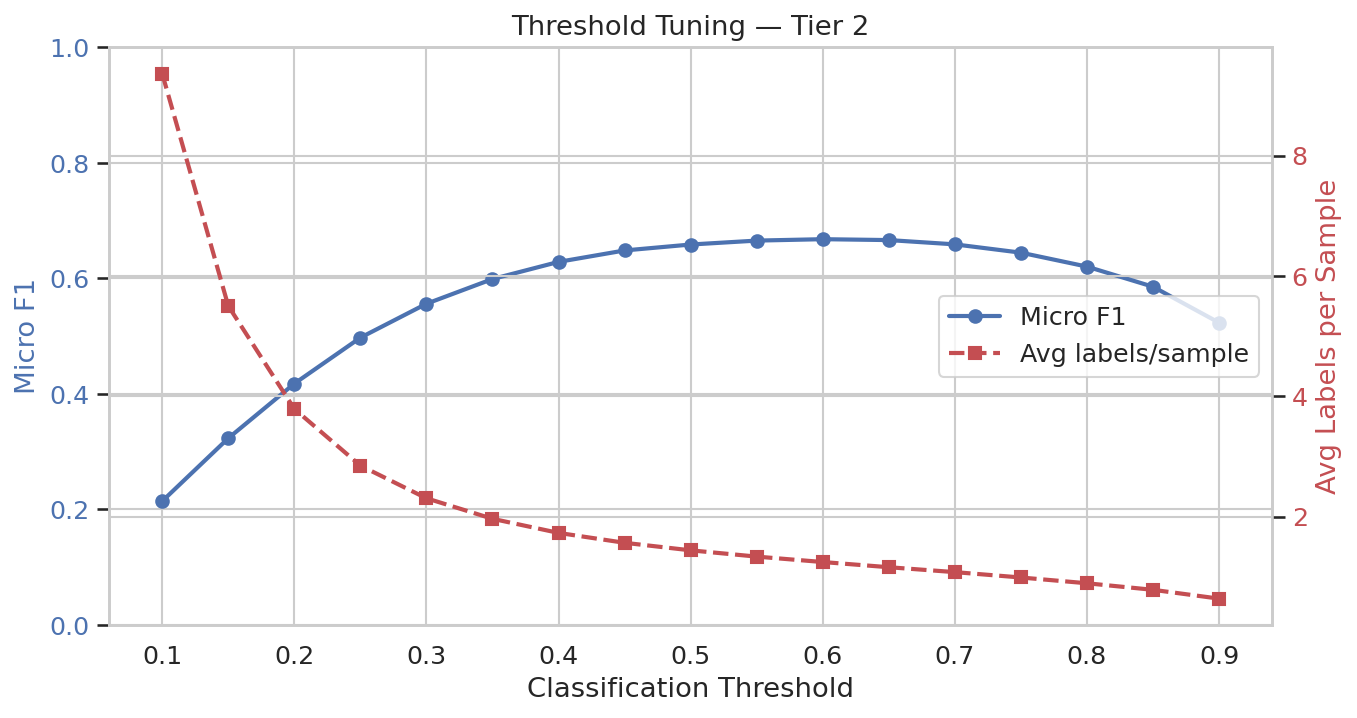
| Tier 2 | 65.9% | 21.4% |
| Tier 3 | 58.9% | 21.8% |
| Metric | Value |
|---|---|
| Primary category accuracy | 18.4% |
Modeling implication
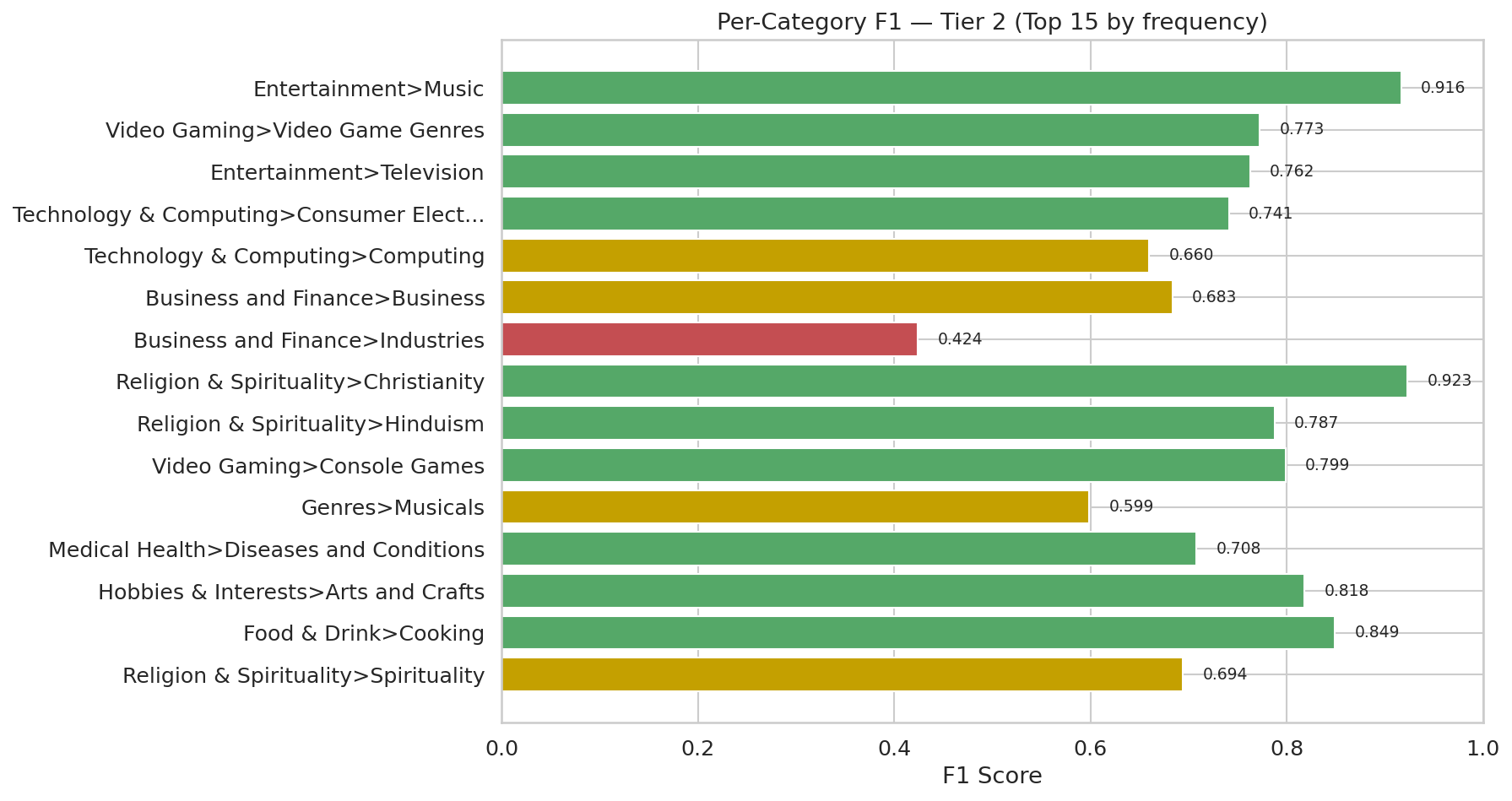
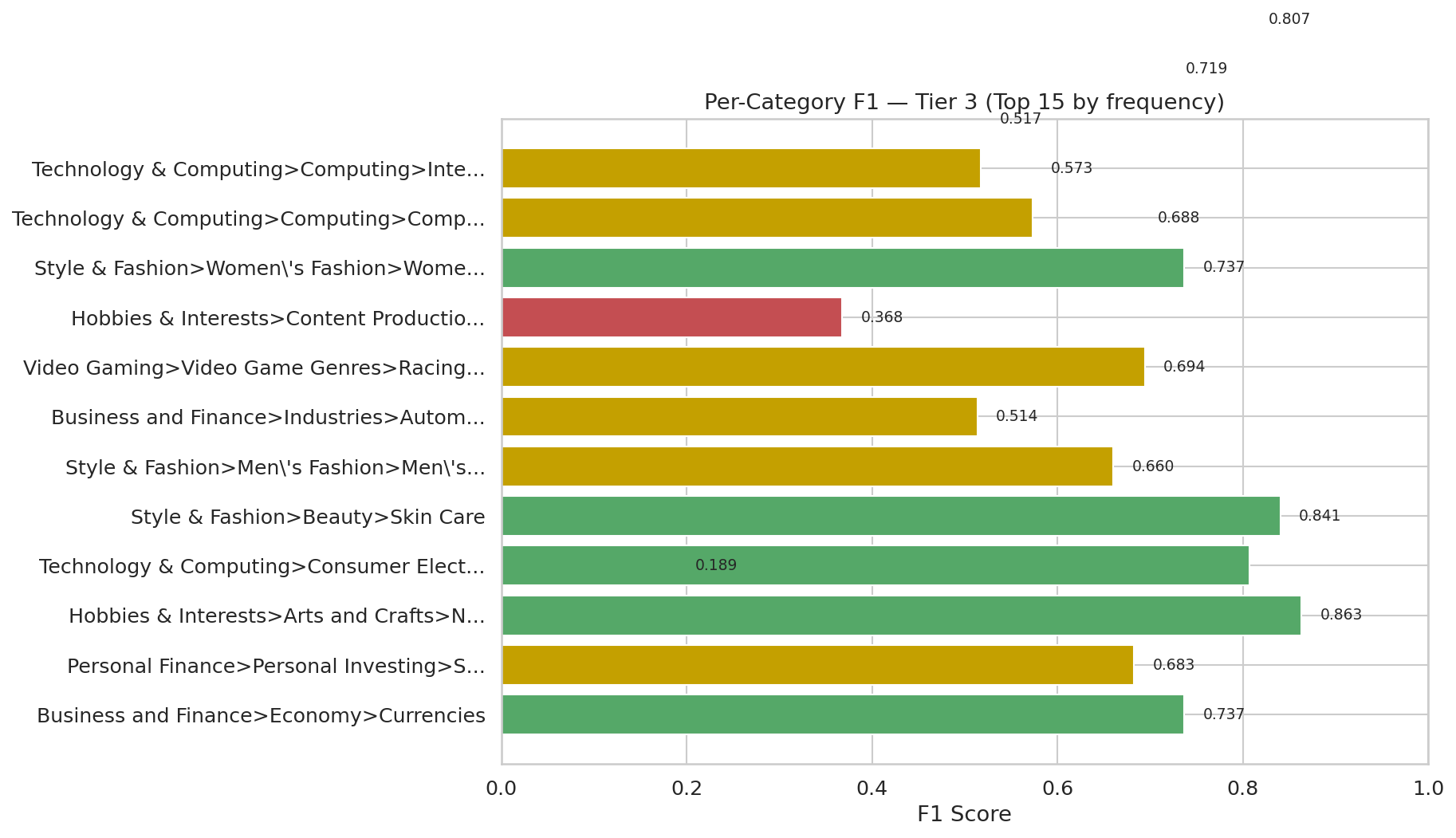
The Tier 1 result is strong enough to support production experimentation. The lower macro F1 values at Tier 2 and Tier 3 suggest that rare categories need more balanced training data, additional sampling controls, or category-specific thresholds before the model should be treated as final.
Detailed methodology and results
Supporting methodology, figures, and tables are rendered here as native page content with the same visual system as the rest of this website.
Generated: 2026-03-20 13:29
Overview
This model classifies media content into IAB 3.0 taxonomy categories using a cascading hierarchical approach. It replaces the external classification API with an in-house solution trained on existing labeled data.
How It Works
The model uses a cascading architecture : Tier 1 predictions narrow down the possible Tier 2 categories, and Tier 2 narrows down Tier 3. This ensures parent-child consistency and reduces errors.
Training Data
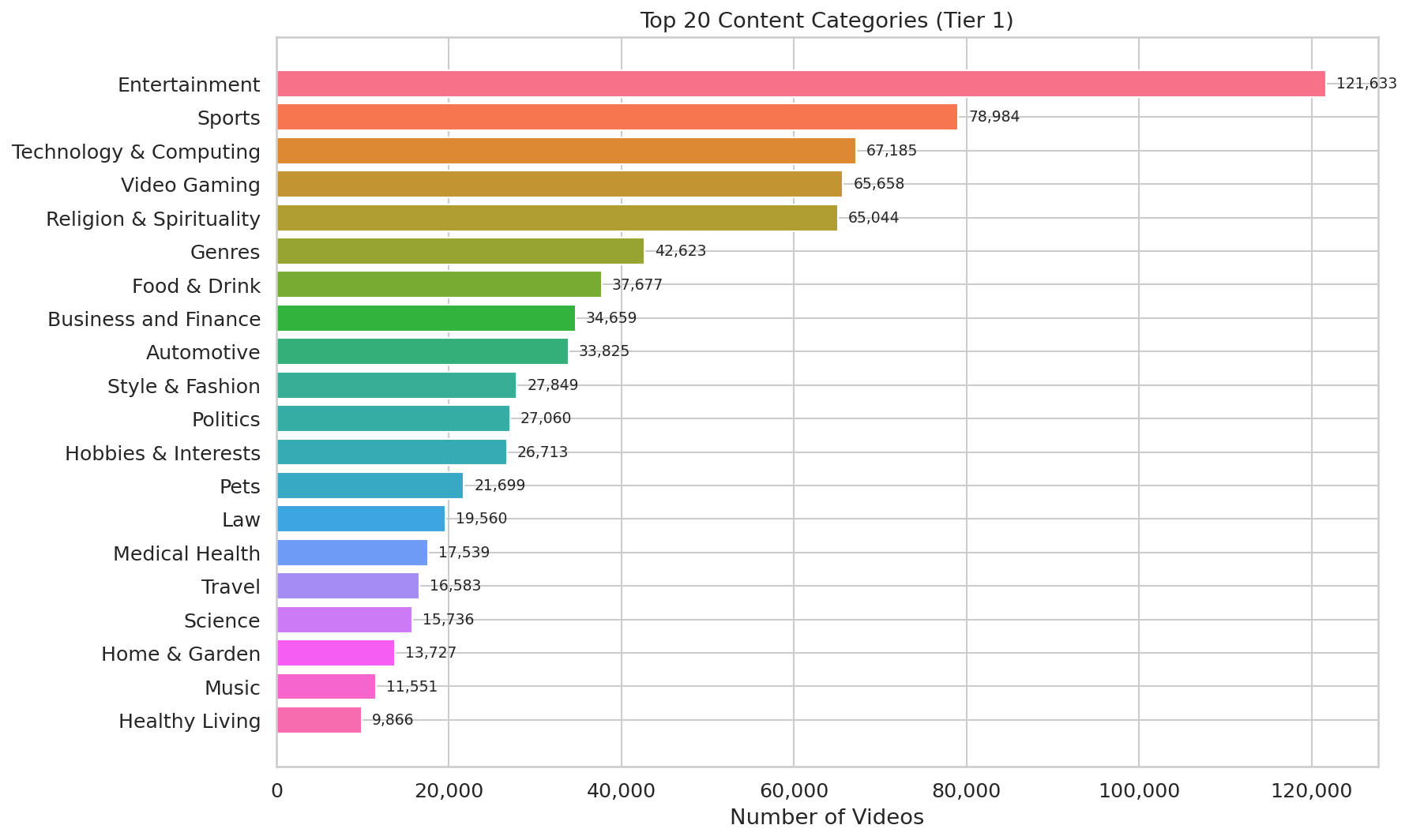
Model Performance